

By Jireh Pearl Casionan
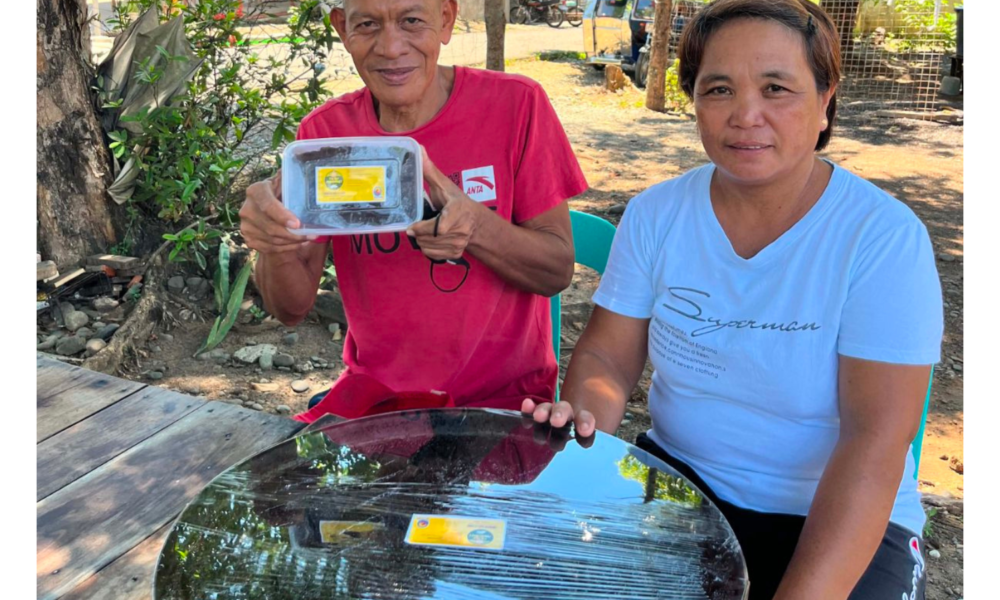
Known as “Tatay Manding”, Armando Japones has stayed consistent in his recipe of making bibingkang kanin, kalamay, puto, and kutsinta in Quirino province. Growing up in Saguday town, the art of cooking kakanin is a culinary legacy he inherited from his parents.
In 1990, Tatay Manding married. One afternoon, while enjoying a snack of their homemade bibingkang kanin, they decided to sell the extra pieces to their neighbors. Encouraged by the positive response, they began selling throughout the neighborhood the very next day.
But to fund their five children’s education, Tatay Manding’s wife worked abroad. Without her help, he had to temporarily pause their growing delicacy business.
When she returned in 2010, their overseas savings had been entirely spent on schooling, leaving them with zero capital to restart. Fortunately, that same year, they became clients of CARD MRI Rizal Bank, Inc (CARD RBI), a microfinance-oriented rural bank, which helped them to save again.
In 2011, they took out their first loan from CARD RBI and used it as fresh capital to relaunch the kakanin business they loved. With the business properly back on its feet, they officially registered it with the Department of Trade and Industry (DTI) that same year.
The loans from CARD RBI served as a financial lifeline for the couple. During tight periods, Tatay Manding sometimes used short-term loans to finance his children’s ongoing education, quickly paying them off using their daily sales. Because they were recognized as good payers, their account officer continuously offered them higher loans, which they used to sustain their delicacy business and eventually expand their distribution to other municipalities across Quirino province.
As their own delicacy established its identity of distinct flavor, it became a culinary cultural pride of their town of Saguday. In 2024, Tatay Manding’s special bibingka and their story were published in Spectrum, the official newsletter of the Saguday Local Government Unit (LGU), featuring it as the town’s authentic flavor, a taste of their home and heritage, and a symbol of their unity and success. His very own kakanin have also won numerous provincial delicacy contests, always bagging the first place, and have become an integral part of their community’s identity.
However, as his delicacy brand became well known, others tried to steal his identity. Some customers bought his products, removed the labels, and rebranded them as their own. Others made their own delicacies and falsely sold them under Tatay Manding’s name.
But the true taste of Tatay Manding’s kakanin never failed the town. Loyal customers could immediately tell the difference and helped expose the imitations. “Haan met kun Tatay Manding ditoy (This isn’t Tatay Manding’s),” they would say.
One time, a businessman offered him PHP 50,000 to teach him the secret recipe so they could mass-produce it. But he firmly refused. To him, it was his parents’ legacy that he wanted to preserve and eventually pass on to his children. Instead, he offered to become the businessman’s wholesale supplier to ensure his delicacies would be resold while still carrying his own brand.
Tatay Manding admittedly faced a challenge in producing their kakanin. Because they cook in classic, traditional methods, it demands labor-intensive processes. When a bulk order is scheduled for pickup tomorrow, Tatay Manding and his family begin preparing and slow-cooking the day before to ensure the kakanin’s maximum freshness and perfect texture. But they continue with their process knowing that it’s what made their kakanin uniquely flavorful.
Today, they are receiving bulk orders from cooperatives, major companies, and even international buyers who resell their products in Macau and Hong Kong. From just selling in their neighborhood, their kakanin now also reach other neighboring provinces of Quirino, earning them approximately PHP 30,000 a month. Their business growth has also improved their family’s life. Today, all of their children are married except their youngest, and the couple now owns an e-bike that helps them deliver their products more efficiently.
Tatay Manding believes that maintaining the quality of their traditional delicacies while navigating the demands of business growth requires deep financial discipline. He views microfinance services not as a burden, but as a tool to expand their craft. “Nu ag-loan ka, siguraduen nga pampalawaem ta negosyom (If you’re going to take a loan, make sure to be able to expand your business),” he said. He also emphasizes the importance of being a good payer and always including loan repayment directly in the budget.
Looking ahead, Tatay Manding plans to improve their product packaging to strengthen their brand identity. They also aim to open a localized food cart as their storefront and eventually make their business available for franchising.
Much like their signature, slow-cooked bibingkang kanin, their success was never rushed. It took them deep patience, dedicated hard work, and staying true to what defines them. Tatay Manding and his wife built more than just a business. They nurtured and protected their legacy. And now, they keep making the same delicious kakanin, the same flavor so authentic that it became one town’s lasting legacy.